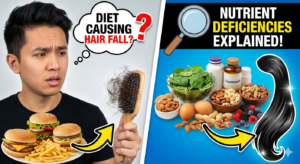
Is Your Diet Causing Hair Fall? Nutrient Deficiencies Explained
This post may contain affiliate links. As an affiliate, we may earn from qualifying purchases.
We often invest in shampoos, oils, and treatments to fight hair fall—but what if the real solution lies on your plate? Hair follicles are among the most metabolically active tissues in the body, and they need a steady supply of nutrients to grow strong and healthy. When your diet falls short, your hair is often the first to show the signs.
🧪 Why Nutrition Matters for Hair
Hair growth depends on the anagen phase (growth stage), which requires protein, vitamins, and minerals. Deficiencies can disrupt this cycle, leading to thinning, shedding, or brittle strands.
⚠️ Key Nutrient Deficiencies Linked to Hair Fall
| Nutrient | Role in Hair Health | Deficiency Symptoms |
|---|---|---|
| Iron | Carries oxygen to hair follicles | Excessive shedding, thinning |
| Vitamin D | Supports follicle cycling | Slowed regrowth, weak roots |
| Zinc | Helps tissue growth & repair | Brittle hair, scalp issues |
| Biotin (B7) | Strengthens keratin structure | Breakage, dullness |
| Protein | Building block of hair | Weak, fragile strands |
| Vitamin B12 | Supports red blood cell production | Hair thinning, fatigue |
| Omega-3 Fatty Acids | Nourishes scalp & reduces inflammation | Dry scalp, lack of shine |
📊 Chart: Contribution of Nutrient Deficiencies to Hair Fall
Iron Deficiency        ████████████  35%
Vitamin D Deficiency   ████████      25%
Zinc Deficiency        ██████        15%
Biotin Deficiency      ████          10%
Protein Deficiency     ███           8%
Others (B12, Omega-3)  ██            7%
👉 Iron and Vitamin D deficiencies are the most common dietary causes of hair fall.
🔍 How to Spot Diet-Related Hair Fall
- Sudden increase in shedding despite good hair care.
- Hair feels thinner or less dense.
- Persistent dryness or brittleness.
- Scalp irritation or dandruff-like flakes.
- Fatigue, pale skin, or brittle nails (signs of iron/B12 deficiency).
📊 Lifestyle Chart: Diet vs. Hair Health
Diet Quality        | Hair Health Impact
--------------------|-------------------
Balanced & varied   | Strong, shiny, resilient
Low protein intake  | Weak, brittle strands
Iron deficiency     | Excessive shedding
Vitamin D shortage  | Slow regrowth
High junk food diet | Dull, lifeless hair
🔍 Real‑Life Scenarios
- The Busy Professional: Skips meals, relies on coffee → protein & iron deficiency → thinning hairline.
- The Strict Dieter: Cuts carbs & fats drastically → omega‑3 shortage → dry scalp, brittle ends.
- The New Mom: Nutrients redirected to recovery & breastfeeding → vitamin D & iron dip → postpartum shedding worsens.
🍔 The Modern Diet Dilemma
Many people unknowingly follow diets that sabotage hair health:
- Crash Dieting: Rapid weight loss often strips away protein and iron reserves.
- High Processed Foods: Packaged snacks are calorie‑dense but nutrient‑poor.
- Low‑Carb Trends: Cutting carbs can reduce B‑vitamins essential for follicle health.
- Skipping Meals: Irregular eating patterns deprive hair of steady nourishment.
👉 Hair follicles thrive on consistency. Starving them—even for a few weeks—can trigger noticeable shedding.
⚠️ Hidden Deficiencies That Sneak In
| Lifestyle Choice | Nutrient Lost | Hair Impact |
|---|---|---|
| Vegan diet without planning | Vitamin B12, Iron | Thinning, fatigue |
| Excess caffeine | Iron absorption blocked | Increased shedding |
| Low‑fat diets | Omega‑3s, Vitamin D | Dry scalp, brittle strands |
| Sugar‑heavy meals | Zinc depletion | Weak roots, slow regrowth |
📊 Chart: Lifestyle vs. Hair Fall Risk
Code
Lifestyle Pattern        | Hair Fall Risk Level
-------------------------|---------------------
Balanced diet            | Low
Crash dieting            | High
Excess caffeine intake   | Moderate
Low-fat diet             | Moderate to High
Processed food reliance  | High
🔍 Surprising Connections
- Gut Health & Hair: Poor gut microbiome reduces nutrient absorption, directly affecting hair growth.
- Stress Eating: Comfort foods high in sugar worsen inflammation, weakening follicles.
- Hydration Factor:
✅ Recovery Tips: Nourish Your Hair from Within
1. Iron Boost
- Eat spinach, lentils, red meat, pumpkin seeds.
- Pair with vitamin C foods (oranges, bell peppers) for better absorption.
2. Vitamin D Support
- Get 15–20 minutes of sunlight daily.
- Include fortified milk, eggs, and fatty fish.
3. Zinc & Biotin
- Nuts, seeds, eggs, and whole grains.
- Biotin-rich foods like sweet potatoes and almonds.
4. Protein Power
- Eggs, beans, dairy, lean meats.
- Plant-based proteins like quinoa and tofu.
5. Omega-3s
- Flaxseeds, walnuts, salmon, chia seeds.
📋 Quick Checklist
- 🥗 Eat iron-rich foods daily
- 🌞 Get regular sunlight for Vitamin D
- 🥜 Add nuts & seeds for zinc and biotin
- 🍳 Prioritize protein in every meal
- 🐟 Include omega-3 sources weekly
🌟 Key Takeaways
- Diet plays a critical role in hair health.
- Deficiencies in iron, vitamin D, zinc, and protein are the most common culprits.
- Balanced nutrition can reverse diet-related hair fall within months.
- Healthy hair begins with a healthy body—your plate is your first line of defense.
✨ Final Word
If you’re struggling with hair fall, don’t just look at your shampoo bottle—look at your diet. By nourishing your body with the right nutrients, you’re not only improving your overall health but also giving your hair the strength, shine, and resilience it deserves.