Hair Fall After Pregnancy: Causes and Recovery Tips
This post may contain affiliate links. As an affiliate, we may earn from qualifying purchases.
Pregnancy brings joy, but it also brings changes—especially to your hair. Many new mothers notice that their once‑thick, shiny locks start shedding a few months after childbirth. This condition, known as postpartum hair loss, is common, temporary, and linked to hormonal shifts.
Let’s explore the causes, symptoms, and recovery tips to help you navigate this phase with confidence.
🧪 Why Does Hair Fall After Pregnancy?
During pregnancy, high levels of estrogen prolong the growth phase of hair, making it appear fuller and thicker. After delivery, estrogen levels drop sharply, and hair enters the shedding phase.
Other contributing factors include:
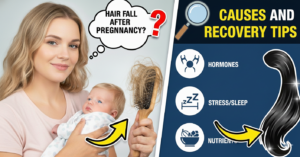
- Hormonal Changes – Sudden drop in estrogen and progesterone.
- Stress & Fatigue – Adjusting to new motherhood can strain the body.
- Nutritional Deficiencies – Iron, vitamin D, and protein shortages affect hair health.
- Sleep Deprivation – Impacts overall recovery and hair growth.
👉 Postpartum hair fall usually begins 2–4 months after childbirth and can last up to 6–12 months.
⚠️ Symptoms of Postpartum Hair Fall
| Symptom | How It Appears | Why It Happens |
|---|---|---|
| Excessive Shedding | More strands in shower drain, pillow, or brush | Hormonal drop triggers shedding |
| Thinning Around Hairline | Noticeable gaps near temples | Hair in resting phase sheds together |
| Loss of Volume | Ponytail feels thinner | Reduced density due to shedding |
| Dryness & Fragility | Hair breaks easily | Nutritional deficiencies + stress |
📊 Chart: Timeline of Postpartum Hair Fall
Code
Months After Delivery | Hair Fall Intensity
----------------------|---------------------
0–2 months            | Minimal shedding
2–4 months            | Peak shedding phase
4–6 months            | Gradual reduction
6–12 months           | Recovery and regrowth
💡 Most women see hair return to normal by their baby’s first birthday.
🔍 Factors That Influence Recovery
- Genetics – Some women naturally shed more than others.
- Diet Quality – Balanced nutrition speeds recovery.
- Stress Levels – High stress prolongs shedding.
- Hair Care Routine – Gentle care reduces breakage.
- Medical Conditions – Thyroid imbalance or anemia can worsen hair fall.

✅ Recovery Tips for Postpartum Hair Fall
1. Gentle Hair Care Routine
- Use mild, sulfate‑free shampoos.
- Avoid tight hairstyles that pull on roots.
- Minimize heat styling and chemical treatments.
2. Balanced Nutrition
- Include iron‑rich foods (spinach, lentils, lean meats).
- Add protein sources (eggs, beans, dairy).
- Ensure vitamins like D, C, and biotin are part of your diet.
3. Stress Management
- Practice yoga, meditation, or breathing exercises.
- Prioritize rest whenever possible.
4. Regular Scalp Care
- Gentle massages improve blood circulation.
- Natural oils (coconut, almond) can nourish roots.
5. Professional Guidance
- Consult a dermatologist if hair fall persists beyond a year.
- Supplements may be considered under medical advice.
📋 Quick Checklist
- 🧴 Switch to gentle shampoos
- 🥗 Eat nutrient‑rich meals
- 💆 Massage scalp weekly
- 🚫 Avoid harsh chemicals & heat
- 🧘 Manage stress with relaxation techniques
🌟 Key Takeaways
- Postpartum hair fall is normal and temporary.
- Hormonal changes are the primary cause, but nutrition and stress play a role.
- Recovery usually occurs within 6–12 months.
- Gentle care, balanced diet, and patience are the best remedies.
✨ Final Word
Motherhood is a journey filled with changes—some visible, some invisible. Postpartum hair fall may feel alarming, but it’s a natural phase of recovery. With the right care and mindset, your hair will regain its strength and shine, just as you regain your rhythm in this new chapter of life.