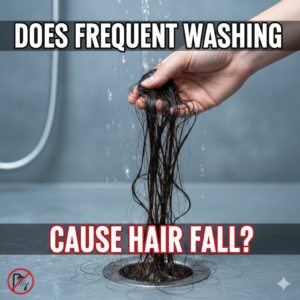
Does Frequent Washing Cause Hair Fall?
This post may contain affiliate links. As an affiliate, we may earn from qualifying purchases.
Hair fall is one of the most common concerns people face today. And one question that sparks endless debate is: “Am I losing hair because I wash it too often?”
Let’s break down the myths, science, and practical solutions so you can finally understand what’s really happening to your strands.
🧪 The Science Behind Hair Washing
Hair grows in a repeating cycle:
- Anagen (Growth Phase): Lasts 2–7 years; 85–90% of hair is here.
- Catagen (Transition Phase): A few weeks; hair detaches from blood supply.
- Telogen (Resting Phase): 2–4 months; hair eventually sheds.
- Exogen (Shedding Phase): Old hair falls out, new hair begins to grow.
👉 Washing your hair doesn’t create hair fall—it simply makes shedding hairs more visible.
💡 Common Myths vs. Facts
| Myth | Reality |
|---|---|
| Washing daily causes baldness | Baldness is primarily genetic and hormonal, not due to shampoo frequency. |
| Shampooing strips all natural oils | The right shampoo maintains balance; harsh products can cause dryness. |
| Less washing = healthier hair | Infrequent washing can lead to scalp buildup, clogged follicles, and even more hair fall. |
🔍 Factors That Actually Influence Hair Fall
- Genetics & Hormones – The biggest drivers of hair loss.
- Stress & Lifestyle – Poor sleep, diet, and anxiety worsen shedding.
- Scalp Health – Dandruff, buildup, or infections can weaken roots.
- Products Used – Sulfate-heavy shampoos may cause breakage.
- Hair Type – Oily scalps may need more frequent washing; dry scalps less.
📊 Chart: Frequency vs. Hair Type
Code
Hair Type        | Recommended Washing Frequency
-----------------|-------------------------------
Oily Scalp       | Every 1–2 days
Normal Scalp     | Every 2–3 days
Dry/Curly Hair   | Every 3–4 days
Chemically Treated| Every 3–5 days (gentle shampoo)
✅ Best Practices for Healthy Hair Washing
- Use sulfate-free shampoos for gentle cleansing.
- Massage scalp lightly—avoid aggressive scrubbing.
- Rinse thoroughly to prevent residue buildup.
- Condition mid-lengths and ends, not the scalp.
- Avoid very hot water; lukewarm is best.
- Pat dry with a soft towel—don’t rub harshly.
🧪 Understanding Hair Shedding vs. Hair Loss
It’s important to distinguish between natural shedding and actual hair loss:
- Shedding: Normal process; 50–100 hairs fall daily as part of the growth cycle.
- Hair Loss: Excessive thinning due to genetics, hormones, or scalp conditions.
👉 Frequent washing often makes shedding more visible but doesn’t necessarily increase hair loss.
📊 Hair Growth Cycle Explained
| Phase | Duration | What Happens |
|---|---|---|
| Anagen (Growth) | 2–7 years | Hair actively grows |
| Catagen (Transition) | Few weeks | Hair detaches from blood supply |
| Telogen (Resting) | 2–4 months | Hair rests before shedding |
| Exogen (Shedding) | Ongoing | Old hair falls, new hair emerges |
💡 Washing simply helps loosen hairs already in the exogen phase.
💡 Myths vs. Facts
| Myth | Reality |
|---|---|
| Washing daily causes baldness | Baldness is genetic/hormonal, not shampoo frequency. |
| Shampoo strips all oils | Gentle shampoos maintain balance; harsh ones cause dryness. |
| Less washing = healthier hair | Infrequent washing can cause buildup, dandruff, and clogged follicles. |
🔍 Factors That Truly Influence Hair Fall
- Genetics & Hormones – The biggest drivers of hair thinning.
- Stress & Lifestyle – Poor diet, sleep, and anxiety worsen shedding.
- Scalp Health – Dandruff, buildup, or infections weaken roots.
- Products Used – Sulfate-heavy shampoos may cause breakage.
- Hair Type – Oily scalps need more frequent washing; dry scalps less.
📊 Recommended Washing Frequency by Hair Type
Code
Hair Type          | Suggested Frequency
-------------------|---------------------
Oily Scalp         | Every 1–2 days
Normal Scalp       | Every 2–3 days
Dry/Curly Hair     | Every 3–4 days
Chemically Treated | Every 3–5 days (gentle shampoo)
🧴 Best Practices for Healthy Hair Washing
- ✅ Use sulfate-free shampoos for gentle cleansing.
- ✅ Massage scalp lightly—avoid aggressive scrubbing.
- ✅ Rinse thoroughly to prevent residue buildup.
- ✅ Condition mid-lengths and ends, not the scalp.
- ✅ Avoid very hot water; lukewarm is best.
- ✅ Pat dry with a soft towel—don’t rub harshly.
📈 Visual Insight: Hair Fall Triggers
Code
Percentage Contribution to Hair Fall
------------------------------------
Genetics & Hormones   ████████████  60%
Stress & Lifestyle    ██████        20%
Scalp Conditions      ████          10%
Product Misuse        ███           7%
Washing Frequency     █             3%
👉 Notice how washing frequency contributes very little compared to other factors.
🌟 Key Takeaways
- Frequent washing does not directly cause hair fall.
- What matters more: products, technique, and scalp type.
- Balance is key—too much or too little washing can both harm hair health.
- Focus on scalp hygiene, gentle care, and the right shampoo for your hair type.
✨ Final Word
So, the next time you see strands in the shower, don’t panic—it’s likely just natural shedding. Washing your hair regularly is about maintaining scalp health, not about causing baldness.
Healthy hair begins with a healthy scalp, and the right washing routine is your first step toward stronger, shinier locks.