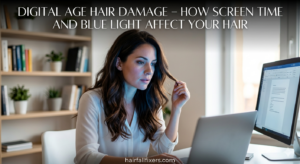
Digital Age Hair Damage – How Screen Time and Blue Light Affect Your Hair
🌟 A Modern Story
Jessica, a 27-year-old graphic designer in San Francisco, spent nearly 10 hours a day in front of her laptop and phone. She noticed her hair becoming dull, brittle, and prone to shedding. At first, she thought it was stress. But her dermatologist explained: prolonged screen exposure and blue light can indirectly affect hair health.
In today’s digital age, Americans spend an average of 7+ hours daily on screens. While we worry about eyesight and sleep, few realize the hidden impact on hair.
🧠 The Science of Blue Light and Hair
What is Blue Light?
- High-energy visible (HEV) light emitted from screens (phones, laptops, TVs).
- Penetrates deeper than UV light, affecting skin and scalp cells.
How It Impacts Hair
- Oxidative Stress: Blue light generates free radicals, damaging scalp cells.
- Hormonal Disruption: Screen time affects melatonin and cortisol, altering hair cycles.
- Sleep Deprivation: Poor sleep reduces follicle repair.
📊 Chart: Digital Exposure vs Hair Health
| Factor | Impact on Hair |
|---|---|
| Blue Light | Oxidative stress, follicle damage |
| Sleep Loss | Reduced repair, increased shedding |
| Stress Hormones | Cortisol surge → hair thinning |
| Sedentary Lifestyle | Poor circulation to scalp |
📖 Case Study 1: Remote Work in the U.S.
During the pandemic, millions of Americans shifted to remote work. A dermatology clinic in New York reported a 30% increase in patients with hair complaints, many linked to prolonged screen exposure and disrupted sleep cycles.
🔍 The Digital Lifestyle and Hair
- Late-Night Scrolling → Melatonin suppression → Poor hair repair.
- Sedentary Work → Reduced blood circulation to scalp.
- Stressful Online Culture → Cortisol spikes → Hair shedding.
📈 Graph: Screen Time vs Hair Fall Risk
<4 hours/day: Low risk
4–7 hours/day: Moderate risk
7+ hours/day: High risk
📝 Interactive Quiz: Is Screen Time Hurting Your Hair?
- Do you spend more than 6 hours daily on screens?
- Do you often scroll late at night?
- Do you experience poor sleep quality?
- Have you noticed dullness or shedding despite good hair care?
Results:
- 0–1 “Yes”: Low risk
- 2–3 “Yes”: Moderate risk
- 4 “Yes”: High risk – screen time likely impacting hair
🛠️ Coping Strategies
Lifestyle Adjustments
- Digital Detox: Reduce non-essential screen time.
- Blue Light Filters: Use apps or glasses.
- Sleep Hygiene: No screens 1 hour before bed.
- Movement Breaks: Improve scalp circulation.
Hair Care Practices
- Antioxidant-rich serums (Vitamin C, E).
- Scalp massages to counter sedentary lifestyle.
- Hydration and balanced diet.
📊 Table: Digital Age Hair Care Routine
| Practice | Benefit |
|---|---|
| Blue light filter | Reduces oxidative stress |
| Sleep hygiene | Supports follicle repair |
| Antioxidant diet | Neutralizes free radicals |
| Movement breaks | Improves circulation |
📖 Case Study 2: Silicon Valley Tech Worker
Mark, a 33-year-old coder in Palo Alto, worked 12-hour shifts on screens. His hair became brittle and thin. After adopting blue light glasses, antioxidant supplements, and regular scalp massages, his hair health improved within 5 months.
🌱 Holistic Approach
Nutrition
- Antioxidants: Berries, spinach, green tea.
- Omega-3: Salmon, walnuts.
- Vitamin D: Sunlight + supplements.
Integrative Practices
- Mindfulness apps (ironically using screens wisely).
- Yoga breaks during remote work.
- Digital curfews for better sleep.
📊 Chart: U.S. Digital Habits and Hair Impact
| Digital Habit | Prevalence in U.S. | Hair Impact |
|---|---|---|
| Late-night scrolling | Very common | Sleep loss → shedding |
| Remote work | High | Sedentary lifestyle |
| Gaming culture | Growing | Stress + poor sleep |
| Blue light filter use | Increasing | Protective |
📖 Case Study 3: College Student in Boston
Emily, a 20-year-old student, gamed late into the night. Her hair became dull and lifeless. By reducing gaming hours, using blue light filters, and eating antioxidant-rich foods, she regained shine and reduced shedding.
🧩 Diagram: Digital Age Hair Damage Cycle
Screen Time → Blue Light + Stress → Sleep Loss → Hair Damage → Anxiety → More Screen Time
Solution: Filters + Sleep Hygiene + Nutrition → Recovery
🧾 Emotional Impact in U.S. Culture
In the U.S., digital culture is deeply tied to identity—social media, gaming, remote work. When hair health suffers, it adds to anxiety and self-image issues. Recognizing the digital-hair connection empowers people to take control.
📚 References (General)
- American Academy of Dermatology: Blue Light and Skin
- Harvard Medical School: Sleep and Screen Time Research
- Journal of Cosmetic Dermatology: Oxidative Stress and Hair Follicles
🎯 Conclusion
The digital age brings convenience but also hidden costs. Blue light, stress, and poor sleep from excessive screen time can weaken hair. For Americans immersed in digital lifestyles, adopting filters, nutrition, movement, and sleep hygiene can protect both scalp and strands.
Is blue light bad for your hair?
Yes — prolonged exposure to blue light (from screens, LED lighting, and even sunlight) can negatively affect scalp and hair health. Research shows it penetrates the scalp, causing oxidative stress, inflammation, and disruption of the hair growth cycle, which may lead to increased shedding and thinning. hairloss-recovery.com Aesthetic Cosmetology and Medicine hairgp.co.uk
🔬 What Is Blue Light?
- Definition: High-energy visible (HEV) light in the 380–500 nm range.
- Sources: Smartphones, laptops, tablets, LED bulbs, and sunlight.
- Known Effects: Sleep disruption, eye strain, premature skin aging — now linked to hair health.
⚠️ How Blue Light Affects Hair
- Oxidative Stress: Generates free radicals that damage scalp cells.
- Inflammation: Irritates follicles, leading to scalp sensitivity.
- Growth Cycle Disruption: Alters the natural phases of hair growth (anagen, catagen, telogen).
- Microbiome Imbalance: Can disturb scalp bacteria balance, worsening dryness and dandruff.
📅 Timeline of Effects
- Short-term: Dry scalp, irritation.
- Medium-term: Increased shedding, weaker strands.
- Long-term: Thinning, potential follicle miniaturization.
📊 Comparison: UV vs. Blue Light on Hair
| Factor | UV Light ☀️ | Blue Light 💡 |
|---|---|---|
| Energy | Higher | Lower but constant |
| Damage | Burns, DNA mutations | Oxidative stress, inflammation |
| Hair Impact | Breakage, discoloration | Shedding, thinning |
| Source | Sunlight | Screens, LEDs, sun |
🛡️ How to Protect Hair from Blue Light
- Limit Screen Time: Reduce prolonged exposure, especially at night.
- Use Filters: Blue light filters on devices.
- Antioxidant Hair Care: Products with vitamins C & E to counter oxidative stress.
- Cover Up Outdoors: Hats or scarves when exposed to strong sunlight.
- Balanced Diet: Foods rich in antioxidants (berries, nuts, leafy greens).
🌿 Natural Remedies
- Rosemary oil scalp massage → improves circulation.
- Green tea rinse → antioxidant protection.
- Aloe vera gel → soothes scalp inflammation.
📝 Summary
Blue light is not just harmful to eyes and skin — it can also damage scalp health and disrupt hair growth cycles, leading to hair fall. In today’s digital lifestyle, especially in the U.S. and globally, constant exposure from screens and LEDs makes this a growing concern. Protecting your hair with antioxidants, lifestyle changes, and protective habits can help reduce the risk of thinning and shedding. 🌿✨
Why is Gen Z losing hair?
Gen Z is losing hair earlier than previous generations due to a mix of lifestyle stress, poor diet, excessive screen time, harsh chemical treatments, and genetic predisposition. Unlike older generations, hair thinning is now common among people in their late teens and twenties.
🔬 Key Reasons Gen Z Is Experiencing Hair Loss
1. Stress & Fast-Paced Lifestyle
- Chronic stress increases cortisol, which disrupts the hair growth cycle.
- Academic pressure, career uncertainty, and social media anxiety are major triggers.
2. Poor Diet & Nutritional Deficiencies
- Reliance on fast food and processed meals leads to low protein, iron, and vitamin D intake.
- Deficiencies in biotin, zinc, and omega‑3 fatty acids weaken follicles.
3. Harsh Hair Treatments
- Frequent use of chemical dyes, relaxers, and heat styling tools damages keratin bonds.
- Trend-driven treatments (bleaching, straightening) accelerate breakage.
4. Screen Time & Blue Light
- Excessive exposure to blue light from devices may cause oxidative stress on scalp cells.
- Combined with poor sleep, this worsens shedding.
5. Genetic & Hormonal Factors
- Androgenetic alopecia (pattern baldness) is appearing earlier.
- Conditions like PCOS in young women contribute to hormonal hair loss.
📊 Lifestyle vs. Hair Health (Gen Z)
| Factor | Impact on Hair | Example |
|---|---|---|
| Stress | Cortisol disrupts growth | Exams, job pressure |
| Diet | Weak follicles | Fast food, soda |
| Chemicals | Breakage & thinning | Bleaching, keratin |
| Sleep | Poor repair cycle | Late-night scrolling |
| Genetics | Early baldness | Family history |
⚠️ Risks Unique to Gen Z
- Earlier onset: Hair thinning visible by age 18–25.
- Confidence impact: Hair loss linked to anxiety and self-esteem issues.
- Misinformation: Many fall prey to “miracle cures” marketed online. LinkedIn
🌿 Practical Strategies to Prevent Hair Loss
- Balanced diet: Eggs, spinach, salmon, nuts, and beans.
- Stress management: Yoga, meditation, regular exercise.
- Gentle care: Limit chemical treatments, use sulfate-free shampoos.
- Screen hygiene: Reduce late-night device use, apply blue light filters.
- Medical help: Consult dermatologists for early intervention (PRP, minoxidil, etc.).
📝 Summary
Gen Z is losing hair earlier due to stressful lifestyles, poor nutrition, harsh chemical treatments, and genetic predisposition. The combination of modern habits (screen time, fast food, salon trends) with biological factors has made hair fall a growing concern among young adults. Addressing this requires a holistic approach — diet, stress control, gentle hair care, and medical guidance — to protect confidence and long-term scalp health. 🌿✨
About The Author